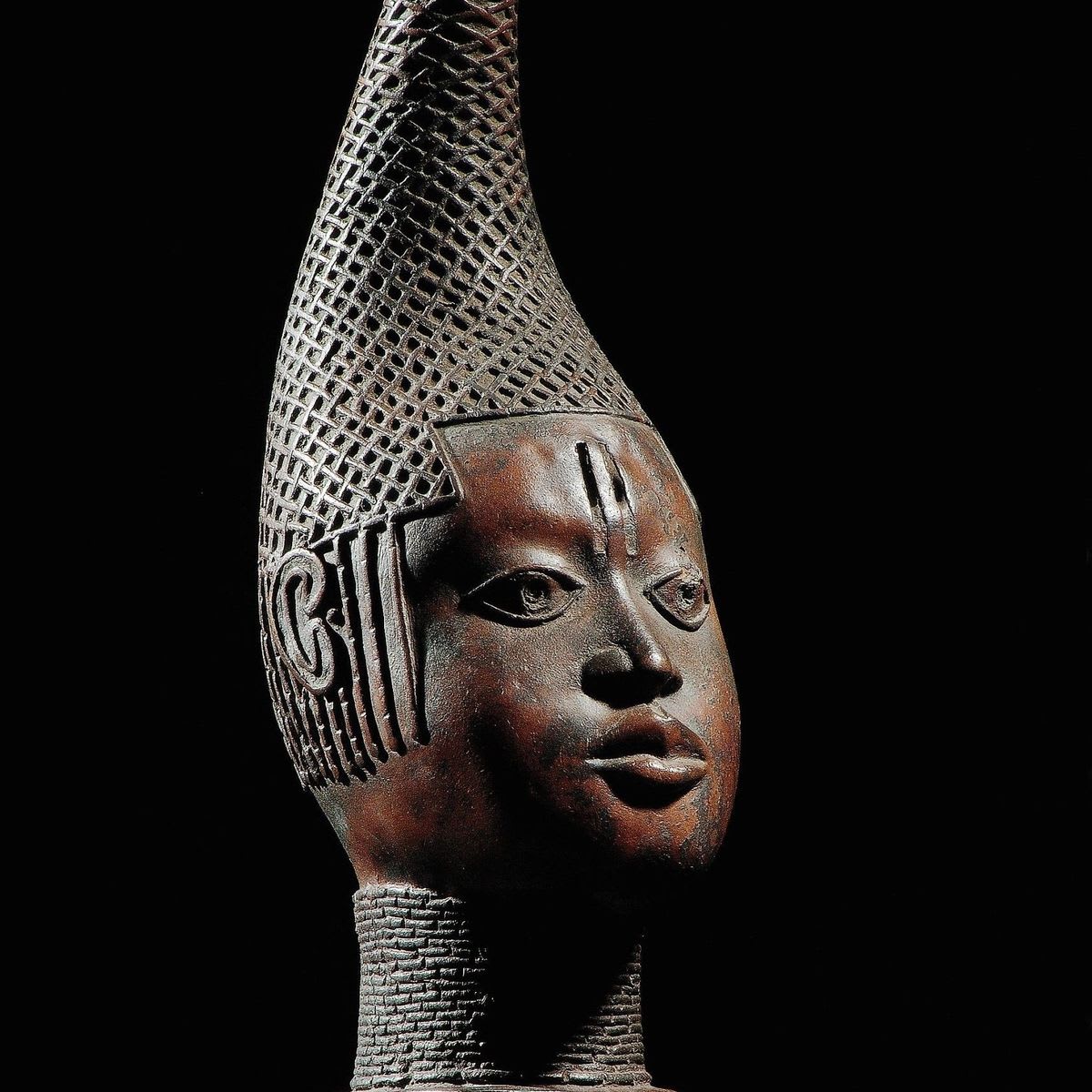
The Benin Bronzes: Masterpieces of African Metalwork
In 1897, British colonial forces invaded Benin City — the capital of the Benin Kingdom in what is now southern Nigeria — and burned much of it to the ground. In the looting that followed, they carried off thousands of extraordinary objects: intricately cast brass plaques, finely worked bronze heads, carved ivory tusks.
These objects — known collectively as the Benin Bronzes — were distributed to museums across Europe and America. Today, approximately 40% of the known pieces are held in European museums, with the British Museum holding the largest collection. About 5,000 pieces remain in Benin City.
The story of the Benin Bronzes is one of the most important — and contentious — in the history of art.
The Kingdom of Benin
The Benin Kingdom was one of the most sophisticated states in pre-colonial Africa. Founded around the 11th century, it developed a complex political structure centred on the Oba (king), who was considered divine.
The capital, Benin City, was enclosed by a system of earthen walls and moats that, at their greatest extent, was reportedly the world's largest earthwork — larger than the Great Wall of China by total length, though not continuous.
The Art of the Court
The brass casting tradition of Benin dates to at least the 13th century. According to Benin oral tradition, the technique was brought from Ife — the sacred city of the Yoruba, where some of the most naturalistic sculptures in African art history were produced.
Benin court artists (the Igun Eronmwon guild) worked exclusively for the Oba, casting commemorative heads of deceased Obas and queen mothers, plaques documenting court ceremonies and historical events, and figures of chiefs, warriors, and deities.
The technical sophistication of the casts astonished European scholars when they first encountered them — the lost-wax (cire perdue) technique used produced works of remarkable precision and detail. Some early European observers refused to believe they could be African in origin.
The 1897 Raid
The British "punitive expedition" of 1897 was ostensibly a response to the killing of a British trade delegation (itself a disputed episode). In reality, it was part of the broader colonial project to control the trade routes and resources of the Niger Delta.
When British forces sacked Benin City, they found a rich royal court with an extensive art collection. The looted objects were auctioned in London to offset the cost of the expedition — thus dispersing what had been a coherent royal collection across European institutions and private collectors.
Repatriation
The question of repatriation has dominated international museum discourse in recent years. Germany's Humboldt Forum returned significant pieces to Nigeria in 2022. Other institutions are engaged in ongoing negotiations.
The Benin Royal Museum project, housed in what will be a purpose-built institution in Benin City, aims to reunite pieces from across the world in a single institution on their original soil.
The Living Tradition
The brass casting tradition of Benin has never stopped. The Igun Eronmwon guild still operates in Benin City, producing commemorative heads, figures, and plaques using the same lost-wax technique their ancestors used centuries ago.
AfriCraft connects buyers to contemporary Benin-tradition craftspeople producing works in this centuries-old tradition. These are not replicas — they are new additions to a living artistic lineage.
Share this story

Enjoyed this story?
Subscribe for more craft stories, artisan spotlights, and exclusive offers.
No spam. Craft stories, new products & exclusive discounts only.